
Reimagining Professional Learning
Professional learning in schools should not just be about checking a box or reaching the required number of hours. Instead, it should be about supporting educators and schools to better serve their students. Effective professional learning programs can help educators and leaders navigate change, plan and set goals for schools and classrooms, foster positive learning environments, and increase student engagement.
To ensure students benefit from the professional learning given to educators and leaders, we need to ensure that the learning is relevant and based on educational research and observation of the ways students learn and engage best in the classroom. Tailoring learning to specific program objectives, stakeholder groups, institutional goals, and educational research creates experiences that can impact students.
Through effective professional learning, teachers and leaders can learn to:
- Make meaningful instructional changes in the classroom
- Create learner-centered environments that center students
- Develop frameworks for differentiation to elevate student engagement
- Plan and deliver cohesive learning by mapping curriculum and assessments meaningfully
- Build skills to drive intentional change and navigate unpredictable situations
- Move past compliance-based planning and plan for continuous improvement
Effective professional learning is a process – it should be ongoing and support continuous improvement efforts in schools and districts.
A more flexible professional learning model built for improvement might include the following phases: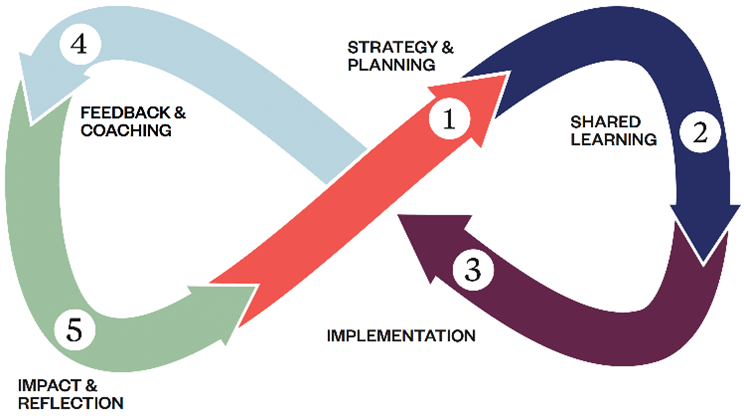
- Strategy and Planning: Using school data, determine your school or system's professional learning needs and plan learning experiences that drive improvement.
- Shared Learning: Build a clear understanding, common vocabulary, and shared expectations for teachers and leaders to ensure professional learning is relevant and actionable.
- Implementation: Provide professional learning experiences with timely content directed towards your shared learning goals.
- Feedback & Coaching: Ensure that all participants receiving professional learning receive timely support and feedback that is tied to daily practice and progress monitoring with students.
- Impact & Reflection: Reflect on your professional learning experience and examine relevant data points to determine its impact and facilitate data-informed decision-making.
School data is central to this process and to any effective professional learning program. Through observation tools, surveys, and assessments, schools can gauge the degree of student engagement and agency within a learning environment and monitor the impact of teacher-student interactions on student learning. An effective professional learning program will leverage data from various tools so educators can reflect on their own practices to refine instructional strategies.
Data collected during and after professional learning experiences also helps to identify successful implementation of strategies learned and if desired results have been achieved. Learning is iterative and ongoing, so if the results do not meet expectations, leaders can reflect on the process, identify necessary adjustments, and restart the cycle for improved outcomes.
As you plan your professional learning this year, consider how you might reimagine professional learning for your school or district. How can you use data more effectively? How can you involve teachers in the process? How can you ensure your professional learning is relevant and impactful?
To learn more about customizable professional learning to increase student engagement, click here.